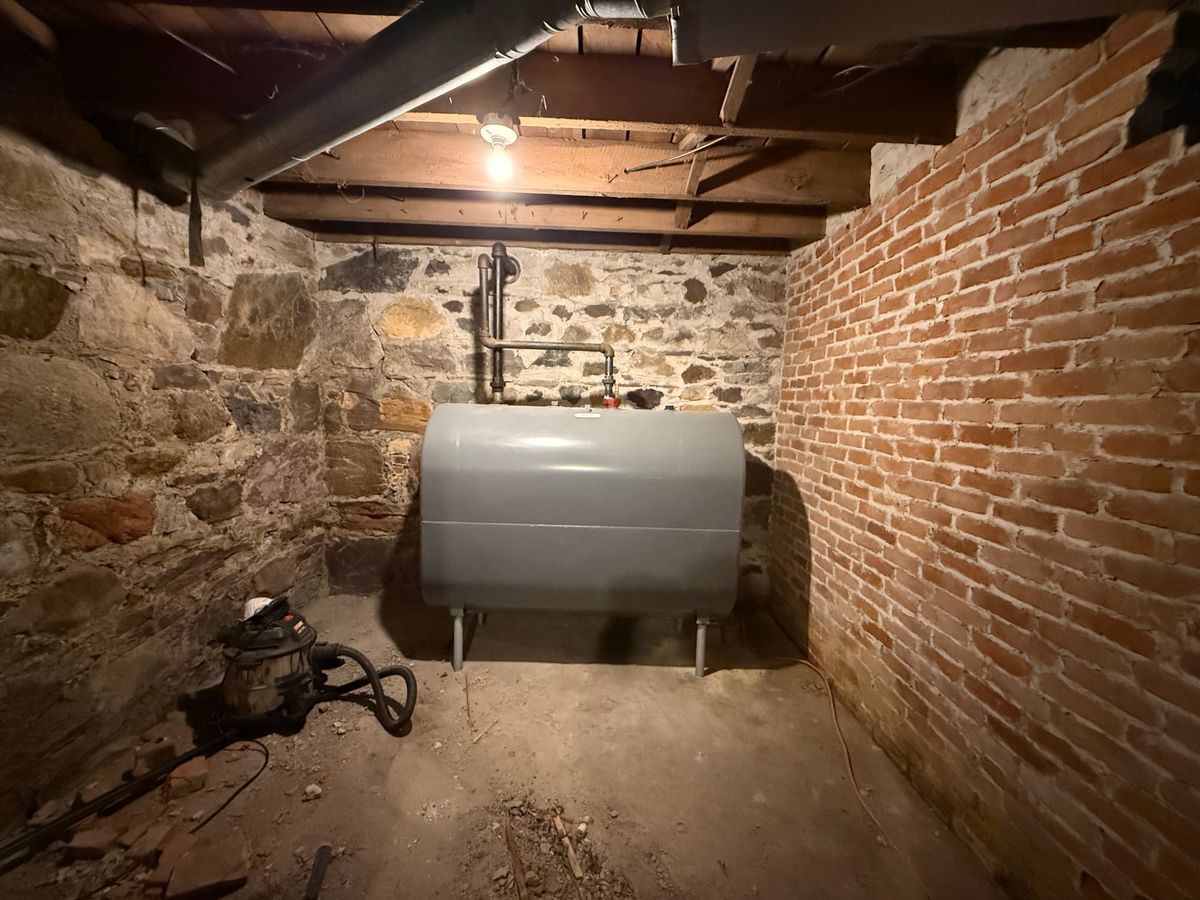
If your home is heated with oil, the tank storing that fuel is more than just a metal container in your basement or backyard. It is a regulated piece of infrastructure with real inspection requirements, real environmental liability, and real consequences when things go wrong.
Vermont has some of the most proactive oil tank regulations in the country, and for good reason. A leaking tank doesn't just cost money to clean up. It can contaminate soil, threaten groundwater, and create liability that follows a property long after it changes hands.
Whether you're buying a home with an oil tank or have owned one for years, understanding what the regulations require and what your responsibilities are is worth your time.
Aboveground Tanks: What Vermont Law Requires
Most Vermont homes that heat with oil have an aboveground storage tank, commonly called an AST, located either inside the home, typically in a basement or utility room, or outside. These tanks are regulated by the Vermont Agency of Natural Resources under the AST Rules, which were most recently updated and went into effect on August 1, 2024.
Under current Vermont law, aboveground heating oil tanks must be inspected at least every four years. Inspections must also occur when a new tank is installed, right after the first fill of a new installation, and whenever a homeowner switches fuel suppliers.
Inspections must be completed by a credentialed inspector, one who holds a NORA Gold, Bronze, or Silver certification, a Vermont Oilheat Certificate of Fitness, or a certificate of completion from a NORA-approved Oilheat Tank Seminar. This is not a self-inspection. It requires a qualified professional using a state-issued checklist.
For more information on Vermont's AST requirements, visit the Vermont Department of Environmental Conservation's Aboveground Storage Tank page.
Red Tags and Yellow Tags: What They Mean
One of the more important things Vermont homeowners should understand is the tagging system for non-compliant tanks.
A red tag means the tank has been identified as non-compliant and fuel deliveries are prohibited until the issue is corrected. A fuel company that delivers to a red-tagged tank assumes liability for any resulting spill. If your tank gets red-tagged, it is not just an inconvenience. It is a signal that something needs to be fixed before you can receive fuel.
Vermont introduced a yellow tag system under the 2024 rule revision. A yellow tag allows conditional fuel deliveries to tanks that are non-compliant but present a lower environmental risk. Yellow tags expire on May 1 of each heating season. After that date they become red tags automatically. They cannot be renewed.
The state maintains an online database of red-tagged tanks. If you are buying a home with an oil tank, it is worth checking.
Your Oil Provider and the Inspection Requirement
Here's something worth understanding clearly. Your fuel dealer is not just delivering oil. Under Vermont regulations, they are required to inspect your tank before an initial delivery when you become a new customer. They are also required to refuse delivery to a non-compliant tank.
A good oil provider is proactive about this. They should be tracking the four-year inspection schedule for their customers, flagging tanks that are approaching or past due, and coordinating inspections as part of their service relationship.
If your oil provider has never mentioned the inspection requirement, has not inspected your tank in more than four years, or cannot tell you when your last inspection was completed, that is worth paying attention to. The inspection requirement exists to protect you, your property, and the environment. A provider who is not on top of it may not be providing the level of service your home deserves.
Underground Tanks: A Different and More Serious Category
Some older Vermont homes, particularly those built before the 1980s, may have underground storage tanks, or USTs, that were used for heating oil and have since been taken out of service or are still in use.
Underground tanks carry significant environmental liability. A leaking underground tank can contaminate soil and groundwater in ways that are expensive and complicated to remediate. Vermont law requires that USTs used for heating oil at residential properties be registered with the state if they exceed 1,100 gallons in capacity. Out-of-service underground tanks must be emptied if they have been inactive for more than 90 days.
For buyers, the presence of an underground tank, active or abandoned, is a due diligence item that deserves careful attention. Ask whether any underground tanks exist on the property, whether they are active or decommissioned, and whether any environmental assessment has been conducted. The Vermont DEC maintains records that can help verify the history of a property's storage tanks.
Vermont's Underground Storage Tank program provides detailed information on regulations, registration requirements, and closure standards.
Financial Assistance for Tank Replacement
If your tank needs to be replaced or removed, Vermont offers financial assistance through the Petroleum Cleanup Fund. Current grant levels include up to $2,000 for an indoor tank replacement, up to $3,000 for an outdoor tank, and up to $4,000 for an underground tank. Additional assistance may be available through USDA programs for qualifying homeowners.
These programs exist because Vermont recognizes that tank compliance is in everyone's interest, and that the cost of replacement should not be a barrier to doing the right thing.
What Buyers Should Ask
If you are purchasing a home in Vermont with an oil heating system, the tank deserves specific attention during your due diligence. Ask the seller for documentation of the most recent tank inspection and the date it was completed. Ask whether the tank has ever been red-tagged and whether any issues have been corrected. Ask specifically whether any underground tanks exist on the property, active or decommissioned.
A home inspector will note visible tank conditions during a standard inspection, but a separate review of inspection documentation and tank history gives you a more complete picture before closing.
A Small Amount of Attention Goes a Long Way
Oil tanks are not glamorous infrastructure. They sit quietly in basements and backyards and most homeowners barely think about them until something goes wrong. But in Vermont, where regulations are clear and environmental liability is real, staying on top of your tank's inspection schedule and condition is one of the more straightforward ways to protect your property and your investment.
If you have questions about your tank's compliance status or would like guidance on finding a qualified inspector or fuel provider in your area, feel free to reach out. It's a simple conversation that can prevent a complicated problem.
Frequently Asked Questions
Q: How do I know if my oil tank is due for an inspection? Vermont law requires aboveground heating oil tanks to be inspected at least every four years. If you're not sure when your last inspection was completed, start by asking your fuel provider. They're required to track this. If they can't give you a clear answer, that's a signal it may be time to schedule one.
Q: What happens if my tank gets red-tagged? A red tag means fuel deliveries are prohibited until the problem is corrected. It's not just a paperwork issue. It means you cannot receive oil until the non-compliance is resolved. If you're heading into a Vermont winter with a red-tagged tank, that's a situation you want to address quickly.
Q: I'm buying a home with an oil tank. What should I ask for? Request documentation of the most recent inspection, the date it was completed, and whether the tank has ever been red-tagged. Also ask specifically whether any underground tanks exist on the property, active or decommissioned, as these carry a different and more significant level of environmental liability.
Q: Is there financial help available if my tank needs to be replaced? Yes. Vermont's Petroleum Cleanup Fund offers grants of up to $2,000 for indoor tank replacement, $3,000 for outdoor tanks, and $4,000 for underground tanks. Additional assistance may be available through USDA programs. The cost of replacement doesn't have to be a barrier to staying compliant.
The information in this post is based on 20 years of personal experience in Vermont real estate and is intended for educational purposes only. It should not be considered legal, environmental, or professional inspection advice. Always consult a licensed inspector, contractor, or relevant professional for guidance specific to your property and situation.
Ready to Buy or Sell with Confidence?
Oil tanks, inspection records, underground tank history. These are exactly the kinds of details that can catch buyers and sellers off guard if they're not addressed early. I help my clients navigate the due diligence process with a clear head and a thorough checklist, so nothing surprises you at closing.
Ready to Talk Vermont Real Estate?
Nancy Warren is a Vermont Real Estate Salesperson affiliated with Coldwell Banker Hickok & Boardman and has more than 20 years of experience working with homes throughout the region. Her contributions to Vermont Living Guide draw on that experience and are provided for general informational purposes only. Content should not be considered brokerage services or legal, environmental, inspection, financial, or other professional advice. Readers should consult the appropriate licensed professional for guidance specific to their property or situation.
Nancy's real estate business is separate from Vermont Living Guide. Information about Nancy and her real estate services can be found at asknancywarren.com.