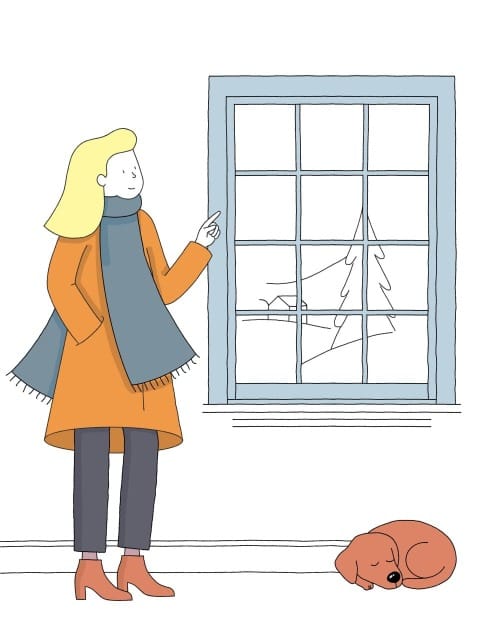
Vermont Winters Have a Way of Revealing the Truth About Our Homes
There's something almost honest about a Vermont winter. The cold has no patience for things that aren't working, and your home will let you know. Sometimes it's a chill you feel standing near a window that shouldn't be there. Sometimes it's that foggy haze between the panes that appears one morning and never really clears. Small things, easy to overlook, but worth paying attention to.
I know this firsthand. Our home dates to the 1850s, and a few years ago we finally replaced the last of what appeared to be the original windows. There were only seven left to do, but I was still stunned when the estimate came in. I remember thinking it was a big investment for something that just sits there.
Then they were installed.
The difference was immediate. Drafts disappeared. Temperatures finally felt consistent from room to room. We found ourselves lingering longer in that space simply because it was comfortable. It completely changed how the room felt and how we used it. That's when I stopped thinking of windows as a passive feature and started seeing them for what they actually are: a system that either works for you or quietly works against you.
Windows are where we see these signals most often in the homes we work with too. Over twenty years of walking through Vermont homes, I've learned that what's happening at the window is rarely just about the window. It's about insulation, moisture control, energy efficiency, and in some cases, the health of the structure around it.
The most common things I see this time of year: seals that have failed and let moisture creep between the panes, frames that have shifted just enough to let cold air in, and sills with persistent moisture that's quietly working its way into the wood. None of these start as emergencies. But all of them become more expensive the longer they're ignored.
The most useful thing a homeowner can do right now is simply take a slow walk through their home and notice. Stand near the windows. Feel for drafts. Look at the glass. Check the trim. It takes five minutes and can tell you a lot.
If something looks off, don't assume the worst. Many window issues can be addressed with weatherstripping, caulk, or a hardware adjustment. Replacement is sometimes necessary, but it's rarely the only option. And when it is the right call, as it was for us, the impact on daily life can surprise you.
Frequently Asked Questions
Do I really need a chimney inspection if I barely use my fireplace?
Yes. The NFPA recommends annual inspection for all chimneys and venting systems regardless of how frequently they are used. An unused chimney can still accumulate moisture, develop cracks, attract animal nests, and deteriorate in ways that create real safety risks the moment you do use it. It can also allow carbon monoxide to enter the home even without a fire burning, depending on the system. Infrequent use is not the same as no risk.
What is the difference between a home inspection and a chimney inspection?
A general home inspection covers the fireplace visually — the firebox, damper, visible masonry, and accessible components — but it is not a substitute for a dedicated chimney inspection. A certified chimney sweep uses specialized tools, including video scanning equipment, to examine the full length of the flue liner and the interior of the system in ways a home inspector typically does not. If a home you are buying has a fireplace or wood stove, it is worth scheduling a separate chimney inspection in addition to your standard home inspection.
How much does a chimney inspection or sweeping cost in Vermont?
Costs vary depending on the type of inspection, the system involved, and whether sweeping or repairs are needed. A basic Level 1 inspection with sweeping for a wood-burning fireplace typically ranges from $150 to $300. A more thorough Level 2 inspection — which is recommended when buying or selling a home — may cost more and often includes video scanning of the flue. Repairs such as repointing, liner replacement, or cap installation are priced separately. Getting a quote from a CSIA-certified sweep is the best way to understand what applies to your specific system.
What is creosote and why is it dangerous?
Creosote is a byproduct of burning wood that accumulates on the interior walls of a chimney flue. It builds up in layers over time and is highly combustible. In its most advanced form — called glazed creosote — it becomes extremely difficult to remove and dramatically increases the risk of a chimney fire. Chimney fires can spread to the surrounding structure of the home and may not always be obvious when they occur. Annual sweeping removes creosote before it reaches dangerous levels and is the most effective prevention.
Can I use my gas fireplace without getting it inspected?
You can, but it is not recommended. Gas fireplaces do not produce creosote, but they still require annual inspection and servicing. A qualified technician should check the burner, ignition system, gas connections, and venting — because a blocked or deteriorating vent can allow carbon monoxide to enter your living space. That risk is invisible and potentially serious. If you are buying a home with a gas fireplace, ask when it was last serviced and request documentation. Annual service is the standard.
Ready to Talk Vermont Real Estate?
After 20 years helping Vermont buyers and sellers navigate everything from what to watch for to when to walk away, I've learned that the right information at the right time makes all the difference. Whether you're thinking about buying, getting ready to sell, or just want an honest conversation before making a move — let's talk.
- Call: 802-846-8813
- Email: nancy@asknancywarren.com
- Visit: asknancywarren.com for listings, resources, and more.
- Follow @asknancywarren for real estate and home insights.
The information in this post is based on 20 years of personal experience in Vermont real estate and is intended for educational purposes only. It should not be considered legal, environmental, or professional inspection advice. Always consult a licensed inspector, contractor, or relevant professional for guidance specific to your property and situation.